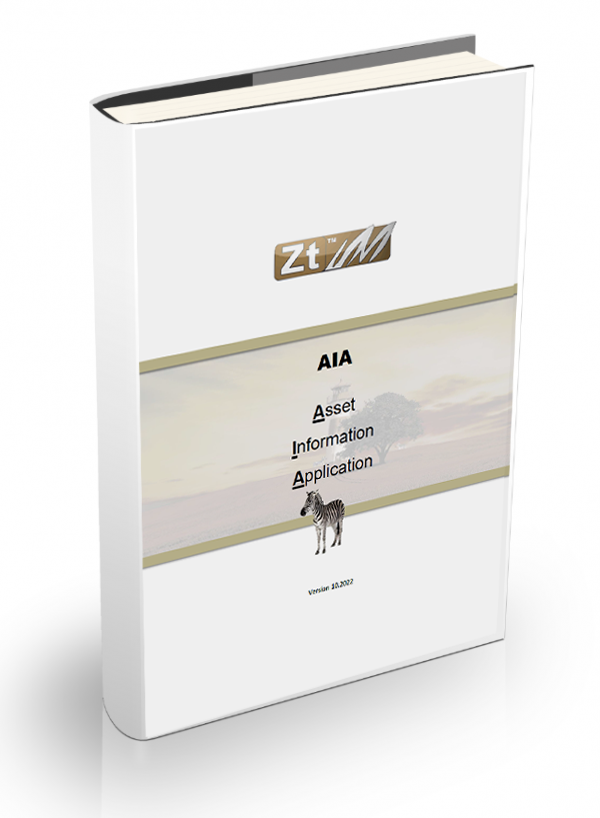
Product information "BIMphase2 | Asset Information Application"
Once this sample AIA was developed it is basic a root to build up on. A BEP forms later a specification of your wishes.
What content an AIA-Template has prepared
"A Client Information Application" is only a sample of 39 pages and a file in PDF format. Our BIM Manager and clients celebrate teamwork and discuss all content, add detailing or amendmends. Inquiries about certain basics are recorded and implemented in the final version of AIA. This enables later as a process to create a complementary BEP document. A BEP prepared as a sample is available as a separate article.
How lean the AIA should be
I recommend a comprehensive description as lean as possible. The pattern gives insight as an example what the reason could be. Too much text and visual explainings may hinder the understanding for the contractual partner. For the perfect constitute different documents handle the content and performance. This avoids that contracts will not be accepted or adhered to. Only basics in AIA describes the purpose what the contractor has to produce.
How mandatory the AIA document is
Yes. The priority is immense. Withous AIA, Building Information Modeling could be understood in a simple way or in different variations. Processing time and the expenses may vary or escalade. The AIA and even later the additional BEP document do communicate the expectation of each client. BIM establishes the results from contractors based on defined purpose.
0 of 0 reviews
Average rating of 0 out of 5 stars
Leave a review!
Share your experiences with other customers.
Login
No reviews found. Share your insights with others.
Task - Work Location:
Remote
|
Weekly model:
4 days/week
I support technical companies, goods traders, and construction project owners in the legally compliant and transparent execution of their projects. As a BIM Manager and external Anti-Money Laundering (AML) Officer, I connect technical, commercial, and legal processes into a consistent, auditable system.
My scope of work includes:
Integrating AML prevention and risk assessment into technical and commercial workflows
Monitoring and tracking capital, payment, and supply chain flows
Supporting compliance with AML, ESG, and Supply Chain Due Diligence requirements
Developing digital proof structures within BIM or ERP systems (transparency of ownership, origin, and contracts)
Managing interfaces between technical design, financial control, and legal assurance
Training and supporting project teams, suppliers, and subcontractors
Target group:
Construction companies, engineering firms, plant manufacturers, technical service providers, goods traders, investors, and clients with increased compliance demands.
Your benefits:
Full transparency of goods, money, and information flows
Reduced liability and reputational risks
Digital documentation of all legally relevant evidence
Efficient integration into existing BIM, ERP, and project structures
Service format:
Online consulting, on-site project integration, external AML appointment, audits, and reporting in line with EU and national AML standards.
Practical. Transparent. Compliant.
Your partner for BIM-based Anti-Money Laundering compliance in technical and economic environments.
Always configure supply chains completely
Ideally 4 days per week, Monday to Thursday. This is not an all-inclusive service; travel expenses and work materials are not included and can be found under BIMpilot™ or BIMphases™.
Language Version:
English
|
Task - Work Location:
DK - From Ribe
The operational BIM Manager combines digital project coordination with practical on-site experience. Remote collaboration is used where it creates value, while site visits and direct coordination are carried out whenever required. This hybrid approach supports efficient, sustainable and climate-conscious building operations.
The BIM Manager opens up new horizons
BIM management is an unknown field for many. It is by no means just about software or 3D models, because practical experience across all relevant trades is essential. A successful BIM Manager understands the interaction between planning, construction, suppliers and building operation.
Digital BIM environments can be compared to a detailed mirror image of the building, enabling better coordination and decision-making. However, successful implementation also requires real-world understanding, communication and, where necessary, direct on-site involvement throughout the supply chain and building lifecycle.
Always configure supply chains completely
A BIM Manager ensures that technical interfaces, suppliers, contractors and operational requirements are coordinated holistically. The goal is to reduce unnecessary effort, improve processes and operate buildings more economically, efficiently and sustainably.
Ideally a 4-day week from Monday to Thursday. This is not an all-inclusive package. Travel costs and work materials are not included and can be found under BIMdepot™, BIMconnect™, BIMpilot™ or BIMphase™.
Task - Work Location:
Remote
|
Weekly model:
4 days/week
The strategic BIM Manager creates the foundation for project success before execution begins. Employer Information Requirements (EIR), BIM standards and digital project structures are developed before the first construction activity starts. This reduces time requirements, clarifies interfaces at an early stage and avoids unnecessary costs.
The advantages of a strategic BIM Manager
The strategic BIM Manager is the digital partner for clients, investors and operators. Projects are supported independently of location, enabling efficient collaboration without unnecessary travel expenses.
Through digital project platforms, video conferences, document management and visual inspections (VCR – Visual Collision Review), planning statuses, interfaces, communication and decisions are made transparent and accessible to all project participants from the beginning.
General Contractors – improved tender and procurement foundations
Project Management – structured decision-making processes
Project Control – digital monitoring of schedules and interfaces
Site Supervision – transparent documentation
Construction Management – clear digital communication channels
What strategic BIM Managers deliver
Many market participants now offer BIM Management. However, independent consulting is essential, as conflicts of interest can arise when the same company also provides its own planning, construction or supply services.
A strategic BIM Manager provides independent support for:
BIM implementation and standards
Definition of guidelines, processes and workflows
EIR (Employer Information Requirements)
Initial and continuously updated BEP (BIM Execution Plan)
Digital documentation and information management
Visual inspections (VCR) and clash reviews
Strategic BIM support is primarily provided digitally. This does not mean less collaboration – it means more efficient collaboration. Project participants receive continuous access to current information, documents and reviews. For specific project requirements, digital support can be supplemented by operational BIM support and targeted on-site visits.
Even without constant physical presence, the project remains fully supported through digital tracking, structured communication, online reviews, schedule targets and transparent decision-making processes.
A strategic BIM Manager combines several traditional roles
Design Coordinator – coordination, review and digital team management
Client Advisor – strategy, organisation and independent consulting
Project Manager – technical coordination, cost and process control
Project Management – milestones, options and decision processes
Site Supervision – overall control and documentation
Always configure supply chains completely
The strategic BIM Manager ensures that all information, responsibilities and interfaces are defined at an early stage. This reduces friction, improves decision-making and creates more sustainable project processes.
Ideally a 4-day working week from Monday to Thursday. This is not an all-inclusive package. Travel costs and work materials are not included and are handled separately under BIMdepot™, BIMconnect™, BIMpilot™ or BIMphase™.
Language Version:
English
|
Task - OHS Service:
One-day site inspection
|
Task - Work Location:
ZA - From George
Construction sites require clear rules, safe procedures, and professional supervision. Our OHS Coordinator (Occupational Safety and Health Coordinator) supports you on-site or remotely – assessing risks, reviewing workflows, and creating tailored instructions for safe operations.
Choosing the right deployment location
Select the deployment location that best suits your project. Each location applies exclusively to on-site visits. This selection does not cover purely remote creation of documents (e.g., OHS Plan, risk assessments, or updates thereof).
Clarity and safety on construction sites
Workplace safety is more than meeting formal requirements. Our HSE Coordinator brings structure, experience, and clear guidance to your team – on-site or digitally. Instead of abstract rules, you receive practical orientation that translates complex regulations into safe and efficient routines – for new builds, renovations, or maintenance.
Every site visit or remote session increases transparency, reliability, and resilience. Safety becomes part of a culture that supports productivity and long-term success.
Our services at a glance
Risk assessment and hazard evaluation
Creation and updating of OHS plans
Coordination according to construction site regulations (ConstructionReg)
Instruction and safety management on-site or remotely
Fully configure supply chains
The standard covers 4 working days per week (Monday–Thursday). This is not an all-inclusive offer. Travel expenses and work materials are not included – relevant items can be found under BIMpilot™ or BIMphases™.
Language Version:
English
|
Task - Reality Auditor:
Step 1 – Site & Team Walkthrough
|
Task - Work Location:
DK - From Ribe
Technical Reality Auditor evaluates the actual execution of construction and technical projects considering technology, organization, and people. The goal is to identify deviations, organizational bottlenecks, and risks early, and provide concrete action guidance for prompt completion. Special focus on hands-on interventions, traceable documentation, and optimization of the project environment, based on experience, leadership competence, and empathy.
Step-by-Step Process
Step 1 – Site & Team Walkthrough
Service: Visual inspection of the site, identification of critical points, observation of team dynamics and project environment, independent recording of open points (LOP)
Delivery: 1–2 A4 pages LOP report, photo documentation, short assessment of stakeholders and problem sources for internal use
Estimated Duration: max. 4 days
Step 2 – Document Analysis & Communication
Service: Development of action guidance to update the LOP list, review of plans, tenders, and change orders; analysis of technical and organizational deviations; assessment of responsibilities, claim management, and communication flows; preparation of conflict potentials for internal use
Delivery: 2–5 A4 pages updated LOP report with problem-solution mapping, references to plans/contracts/change status if applicable, action recommendations, preparation of framing for key personnel
Estimated Duration: max. 6 days
Step 3 – Measures & Organization
Service: Update of LOP report, presentation of concrete immediate measures, prioritization by urgency and risk, recommendations for adjustments, restructuring, or site stops; inclusion of human factors in solution approaches
Delivery: 5–7 A4 pages updated LOP report with recommendations, to-do list with responsibilities, color-coded risk points, separate framing of problem persons or vulnerable stakeholders
Estimated Duration: max. 4 days
Step 4 – Weekly Update
Service: Consolidation of all inspections, analyses, and recommended actions into weekly updates, progress control, and risk management, including social and organizational dynamics
Delivery: Up to 7 pages updated LOP report (Excel or PDF) with status, responsibilities, progress graphics, change assessment, separate notes on problem persons
Estimated Duration: max. 2 days
Step 5 – Project Environment & Risk Assessment
Service: Separate analysis of the entire project environment, identification of technical, organizational, and human risks, optimization potential for completion, assessment of stakeholder behavior and conflict potential
Delivery: 2–4 A4 pages report for internal use with risk assessment, general action guidance, prioritization, optional graphics/diagrams
Estimated Duration: max. 8 days, depending on project size and organizational complexity
Always fully configure supply chains
Best 4 days/week from Monday to Thursday. This is not all-inclusive; travel expenses and work equipment are not included and can be found under BIMpilot or BIMphase.
Language Version:
German
|
Task - Work Location:
DK - From Aalborg
Result-oriented management and execution of construction, MEP, and technical projects, as well as operational crisis situations. Temporarily available, focusing on deadlines, deliverables, responsibilities, change orders, and delay management.
Target Audience
Owners, investors, and stakeholders
Companies with ongoing construction, MEP, or infrastructure projects
Organizations experiencing stalled technical implementation
Executives facing project or implementation crises
Typical Situations
Delays despite planning
Unclear responsibilities among stakeholders
Deliverables not clearly defined or reliable
Escalations without solutions
High coordination effort without progress
Coordination of subcontractor change orders and delays
Role Understanding
No technical planning, does not replace engineers
Creates structure, accountability, and decision-making capability
Problems identified early, solutions developed by responsible parties
Checks change orders and records/communicates delays
Methodology
Lean Project Management: focus on value, clear responsibilities
Transparent schedule and deliverable logic
Early deviation detection
Consistent solution orientation – no excuses
Systematic tracking of change orders and delays
Key Focus Areas
Construction & Technology: project management, schedule and deliverable tracking, coordination of external engineers/subcontractors, change and delay management
Operational crises & transitions: restoration of functionality, exit or shutdown preparation
Engagement & Mandate
Interim mandates, project-based assignments, turnaround and stabilization phases
Short-term assignments possible (e.g., 30 days), extension based on demonstrated value
No line function, no permanent role, clearly defined mandate